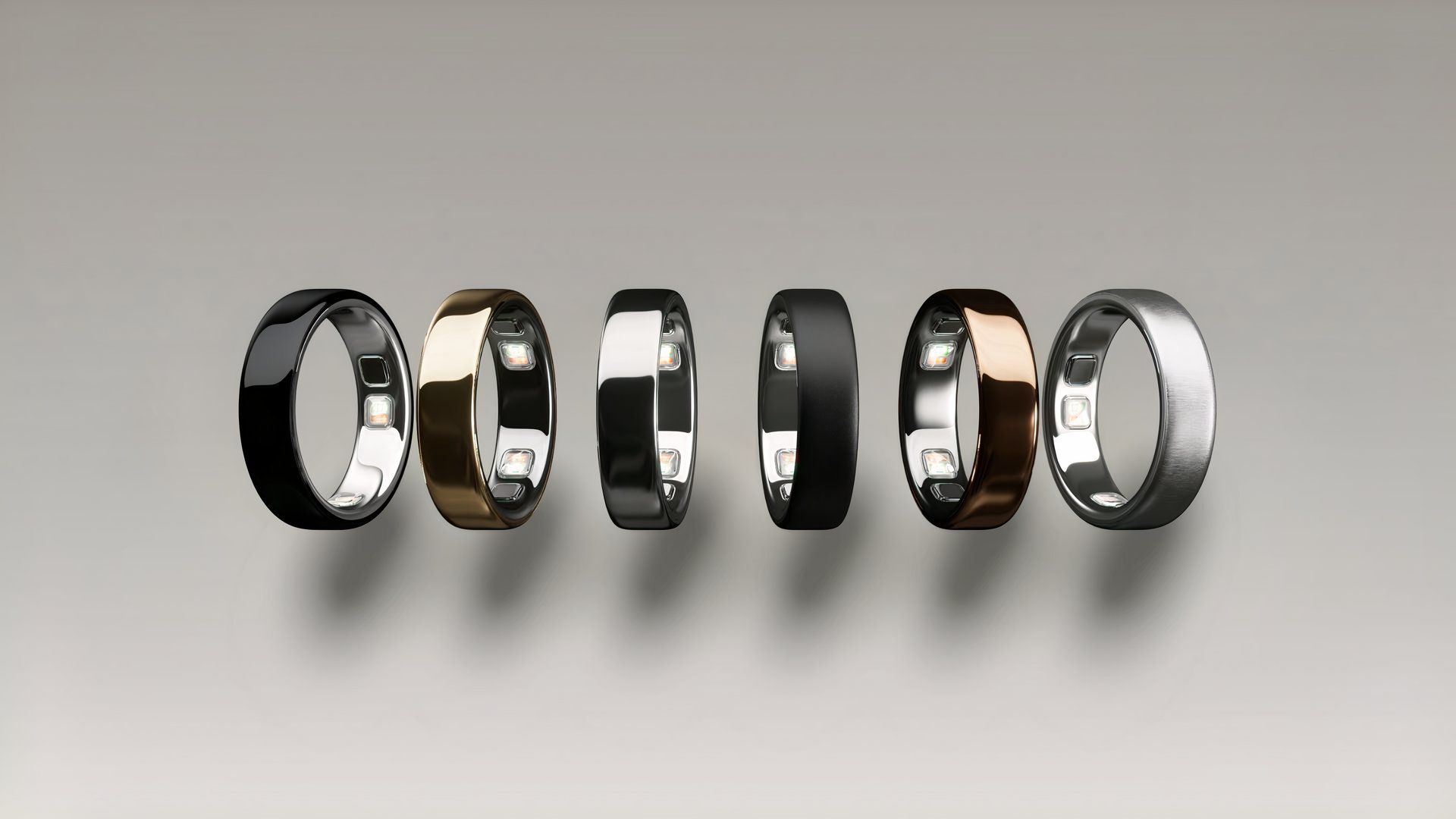
For over a decade, smart rings have struggled to be anything more than jewelry that tracks basic heart data and sleep patterns. The new Oura Ring 5, billed as the smallest smart ring in the world, aims to be more than a fitness tracker - it’s positioned as a proactive health platform designed to connect daily biometrics with professional medical care.
A significantly smaller form factor
The most immediate change is physical size. The Oura Ring 5 is 40% smaller than its predecessor, achieved through a full redesign of the ring’s internals. Oura claims the smaller form factor does not come at the cost of accuracy - the company says more powerful LEDs and 12 optimized signal pathways actually improve sensor readings compared to previous generations.
Early third-party reviews suggest the Ring 5 matches or surpasses the Apple Watch and WHOOP Band in heart rate and sleep-tracking accuracy, though it’s worth noting these assessments are still early.
Health Radar and clinical-grade features
The more significant updates are on the software side. Oura’s Health Radar, available on Gen 3 rings and later, is designed to be proactive rather than reactive. It continuously monitors background biometrics - including nighttime blood pressure and breathing patterns - to surface what Oura describes as medical-grade insights.
New clinical-focused features include GLP-1 insights, which give users a hub to log medication doses, track side effects, and monitor weight changes. Some advanced capabilities require a paid Oura Membership subscription, including connected care (which links users with licensed physicians through a partnership with Counsel Health), Health Records (allowing U.S. users to import lab results, diagnoses, and medication lists), Oura Advisor, and an AI model focused on women’s health.
The ecosystem trade-off
This breadth of functionality comes with a notable caveat. Once a user has aggregated medical history, lab results, and ongoing health data inside Oura’s platform, switching to a competing product becomes increasingly difficult. The convenience of having clinical and biometric data in one place is real - but so is the dependency it creates. Whether that trade-off is acceptable will depend on how comfortable individuals are sharing sensitive health data with a private company, and with an ongoing subscription as the price of entry.
Source: Oura Ring 5 Is Smaller and More Capable - but Comes with Ecosystem Lock-In