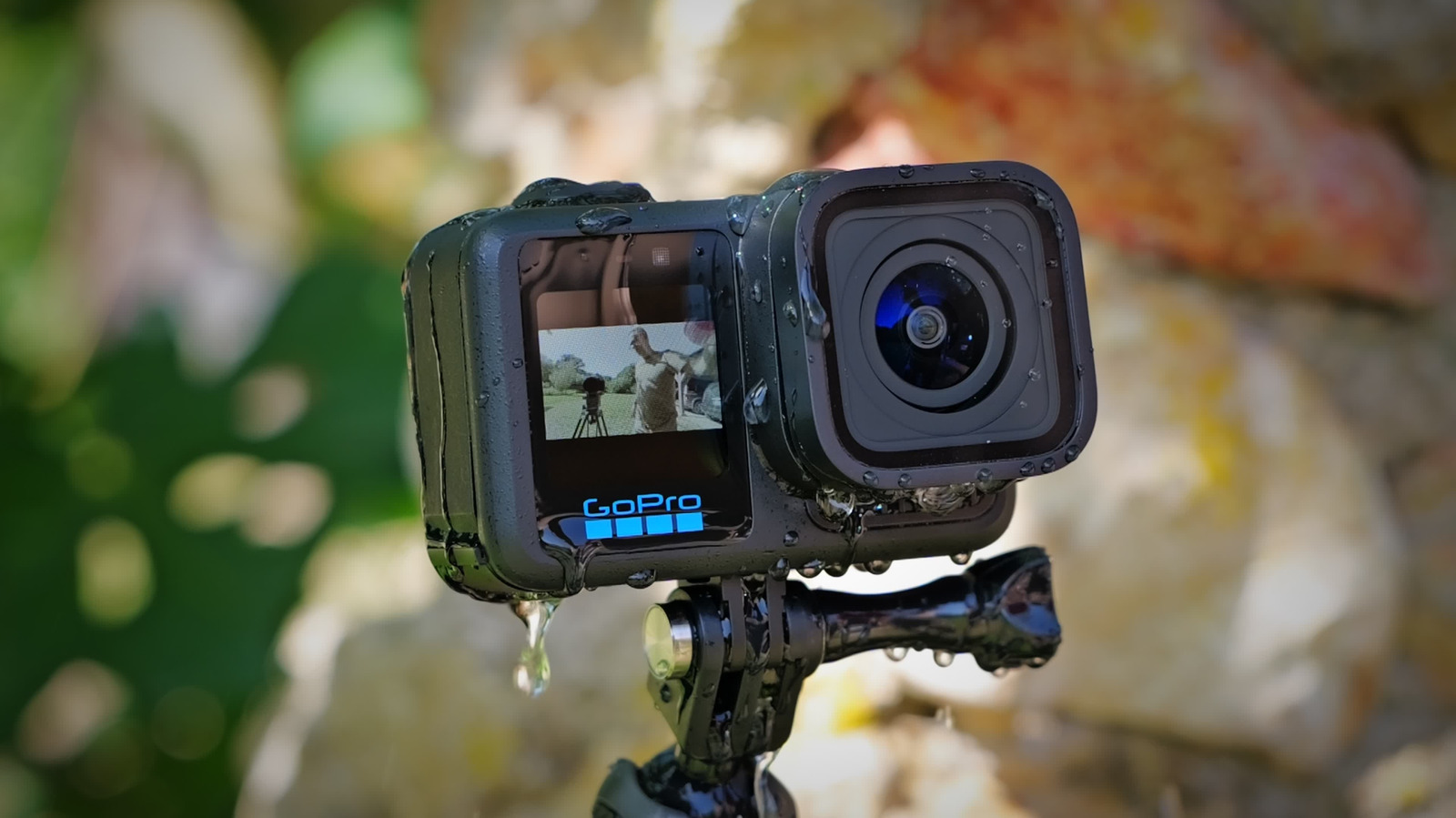
With the biggest action camera sensor yet and open gate 8K video, the Mission 1 is GoPro’s most important new product in years. The two fixed-lens models - Mission 1 and Mission 1 Pro - promise sharp, color accurate video with excellent dynamic range, along with better low-light performance than other action cams. They’re also waterproof, durable and deliver smooth video of extreme action, as you’d expect from a GoPro.
However, there are some tradeoffs with a large sensor. The biggest is size and weight, as the Mission 1 Pro is thicker and heavier than the GoPro Hero 13. It’s also $270 more than that model and its competition. After testing the Mission 1 Pro, the higher quality will easily be worth the extra cash for certain action shooters.
The new 1-inch sensor
The biggest upgrade with the Mission 1 series is the new 1-inch 50-megapixel sensor, measuring 13.2 x 8.8mm. It’s wider than the square 1/1.15-inch sensor on DJI’s 38MP Osmo Action 6, which means more sensor area for gathering light.
The high 50MP resolution allows the Mission 1 Pro to capture 8K video at 60 fps, compared to 4K at 120 fps on the Action 6. Even when releasing footage in 4K, the extra resolution lets you reframe shots or export at full resolution for vertical platforms like TikTok. The new sensor also supports 4:3 open gate capture at up to 8K 30 fps (7,680 x 5,760 pixels), beating all other action cams and many mirrorless cameras as well.
The Mission 1 Pro’s lens has a 156-degree field of view, wider than most action cams. When filming, you can choose a 16mm “Superview” (ultra-wide but distorted), a 16–24mm Wide view (reduced distortion), or a 22–27mm Linear mode that eliminates warping.
Three models are available. The Mission 1 Pro shoots 8K at up to 60 fps and 4K at 240 fps. The Mission 1 is limited to 8K 30 fps and 4K at 120 fps - still higher than most rivals. The Mission 1 Pro ILS, arriving later this year, features a Micro Four Thirds mount for external lenses but no built-in lens, aimed at professional use cases requiring a compact body and high video quality.
Design and features
With its larger sensor and lens, the Mission 1 Pro weighs 0.46 pounds compared to 0.35 pounds for the GoPro Hero 13, and is about three-quarters of an inch thicker. The extra front-loaded weight is more noticeable when mounted on a helmet or cap, though it’s less of an issue when worn on the chest or mounted to a bicycle or vehicle.
The record and power buttons are easier to locate during active use and feel better than the DJI Action 6’s slightly stiff controls. The menus will be familiar to GoPro Hero 13 users, though GoPro has consolidated main camera functions - including bit depth, shutter, and Hypersmooth - under a single “Image” menu for faster access. The Mission 1 also features larger displays than any previous GoPro, with a 1.4-inch front LCD and a 2.59-inch OLED rear display.
Source: GoPro Mission 1 Pro Review: Outstanding Video Quality, Steep Price